Jul 25, 2026
 95
95
Elevator and Escalator Parts from China to Indonesia
Reliable logistics support for trade importers, maintenance suppliers, and building projects
ECBEC LIMITED | China-Side Logistics Support
We Handle the Logistics, You Take Care of the Relationship.

Indonesia’s continued development of residential towers, shopping centers, hotels, hospitals, transport hubs, and industrial facilities creates ongoing demand for elevator and escalator components. For trade importers, the opportunity is not limited to complete new installations. Maintenance, modernization, replacement, and emergency repair projects also require a steady supply of compatible spare parts.
China offers a broad supplier base for lift and escalator components, but successful importing requires more than finding a competitive factory price. Product compatibility, accurate part identification, protective packing, export documentation, shipment planning, and Indonesia-side customs preparation all need to be coordinated before the cargo leaves China.
A small control board may be urgently needed to restore a building’s operation, while a traction machine or a batch of guide rails can require heavy-duty packing and dedicated container planning. The right logistics solution therefore depends on the exact part, dimensions, weight, value, urgency, and project schedule.

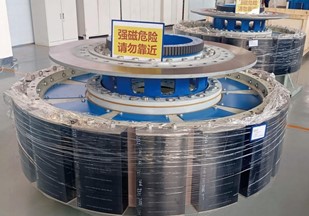
Elevator traction equipment requires careful identification, lifting, securing, and moisture protection.
China’s elevator and escalator supply chain covers standard replacement parts, OEM-compatible components, modernization packages, and project-specific assemblies. This gives importers several practical advantages:
· A wide selection of mechanical, electrical, and safety-related components
· Competitive sourcing for regular maintenance and project quantities
· Access to customized dimensions, finishes, voltages, and control configurations
· The ability to consolidate products from several suppliers into one shipment
· Flexible transport choices for both urgent spare parts and full project batches
However, the wider the supplier selection, the more important China-side coordination becomes. Importers should verify specifications before production and again before shipment, especially when parts are intended for an existing elevator or escalator model.
· Traction machines, geared and gearless motors, brakes, and drive sheaves
· Control cabinets, inverters, printed circuit boards, relays, and power modules
· Door operators, landing doors, car doors, rollers, hangers, and door locks
· Guide rails, rail brackets, fishplates, and fasteners
· Steel wire ropes, belts, rope attachments, and tensioning devices
· Speed governors, safety gears, buffers, limit switches, and sensors
· Car operating panels, landing operating panels, buttons, indicators, and displays
· Traveling cables, communication cables, lighting parts, and ventilation components
· Cabin decoration panels, handrails, mirrors, floors, and ceiling components
· Escalator steps, step chains, step rollers, and return rollers
· Handrails, handrail drive wheels, guide devices, and inlet assemblies
· Main drive chains, sprockets, bearings, shafts, and tensioning components
· Comb plates, floor plates, skirt panels, and safety brushes
· Drive motors, gearboxes, brakes, and control systems
· Sensors, switches, control boards, indicators, and lighting components

An escalator contains many interconnected mechanical and electrical parts; incorrect specifications can delay installation or repair.
Before requesting a freight quotation, importers should make sure the supplier and consignee are discussing the same part. A description such as “elevator motor” or “escalator chain” is usually not enough. The inquiry should include as much of the following information as possible:
· Brand and equipment model
· Part number and serial number
· Clear photos of the existing part and its nameplate
· Technical drawing, dimensions, and mounting position
· Voltage, frequency, power, load, speed, and communication protocol where relevant
· Required quantity and whether the parts are for resale, maintenance, or a specific project
Practical tip Ask the supplier to place the part number, model, and package number on both the packing list and the outer carton or wooden case. This makes warehouse checking, customs inspection, project delivery, and after-sales identification much easier. |
1. Mixed sizes and weights
A single order may contain small electronic boards, medium-sized door operators, long guide rails, and heavy traction machines. These items cannot be packed or handled in the same way.
2. Precision and shock sensitivity
Control boards, sensors, indicators, and inverters may be damaged by impact, vibration, static electricity, or moisture. Anti-static bags, cushioning, rigid cartons, and clear fragile markings may be required.
3. Heavy and irregular components
Motors, gearboxes, drive machines, and escalator assemblies require strong wooden cases or steel frames. The lifting points and center of gravity should be marked so warehouses and terminals can handle the cargo safely.
4. Long cargo
Guide rails, handrails, and long structural parts may exceed normal pallet or container dimensions. Their final packed length should be confirmed before booking, not estimated from the product length alone.
5. Urgent replacement demand
When an elevator or escalator is out of service, delivery time can become more important than the lowest freight rate. Importers may need air freight for the critical part while moving the remaining order by sea.
6. Multiple suppliers
A project may involve several factories in different Chinese cities. Without a clear consolidation plan, importers may pay repeated pickup, warehouse, and export handling costs or receive incomplete shipments.

Wire ropes, cables, control equipment, and structural parts should be packed and labeled by function and package number.

Air freight is suitable for control boards, sensors, buttons, small door components, and urgent maintenance parts. Chargeable weight, battery content, magnetism, and cargo dimensions should be checked before booking. A compact but heavy motor may be charged differently from a lightweight oversized package.
LCL can be practical for mixed spare parts that do not fill a container. Strong outer packing is essential because the cargo will be handled and consolidated with other shipments. Importers should compare the total cost, including origin and destination local charges, rather than looking only at the ocean freight line.
FCL provides better control for large quantities, long guide rails, cabin materials, traction machines, and escalator project components. A container loading plan should consider weight distribution, floor loading, lashing, moisture protection, and unloading conditions at destination.
If the packed dimensions cannot fit safely inside a standard container, open-top, flat-rack, or other project-cargo solutions may be considered. The final method depends on the exact dimensions, weight, lifting points, route, and port acceptance.

Sea freight is suitable for project batches, heavy components, and consolidated elevator or escalator spare parts.
Typical shipping and customs documents may include:
· Commercial invoice with accurate product descriptions, values, brands, models, and quantities
· Packing list showing package numbers, dimensions, net weight, and gross weight
· Bill of lading or air waybill
· Certificate of origin, including Form E where applicable and supported by the rules of origin
· Product catalogs, technical specifications, photos, and material descriptions
· Insurance certificate when required by the trade terms or buyer
· Any permits, inspection documents, test reports, or conformity documents required for the specific HS code and product
Many dedicated lift and escalator parts may be considered under HS 8431.31, but motors, electrical equipment, steel products, cables, fasteners, complete units, and multifunctional assemblies may fall under different classifications. The exact HS code must be confirmed from the product’s actual function, material, and specifications.
Before shipment, the Indonesia importer should confirm valid business and importer status, customs readiness, applicable duties and taxes, and whether the item is subject to LARTAS restrictions, SNI, technical approvals, inspection, or other requirements. These controls can depend on the precise HS code and whether the shipment contains spare parts, complete equipment, or products for a specific regulated project.
Important compliance note Import rules and product controls may change. The consignee or appointed Indonesia customs broker should verify the final HS code and all destination requirements before cargo pickup and booking. Do not rely only on a supplier’s historical export record. |
ECBEC Limited acts as a reliable China-side logistics partner for importers purchasing elevator and escalator components from Chinese suppliers. Our team can coordinate the operational details that are difficult to manage remotely:
· Communication with suppliers in China
· Factory pickup from different Chinese cities
· Warehouse receiving, package checking, cargo photos, and consolidation
· Verification of carton marks, package numbers, and shipping documents
· Sea freight, air freight, LCL, FCL, and project cargo solutions
· China export customs clearance and document coordination
· Form E and document review support where applicable
· Special handling for heavy, long, fragile, and high-value parts
· Shipment tracking and coordination with the Indonesia-side customs and delivery team
For a maintenance importer, this may mean collecting urgent parts from one supplier and shipping them by air. For a building project, it may mean consolidating doors, rails, control systems, traction machines, and decorative materials from several factories into planned container loads. In both cases, the goal is the same: better visibility, fewer document errors, safer cargo handling, and more reliable delivery.
 Mar 16, 2026
 Oct 19, 2026
 Oct 16, 2026