Sept 09, 2026
 32
ECBEC INDUSTRY LOGISTICS GUIDE
CNC Machines and Metalworking Equipment Shipping
From China to Indonesia: packing, container planning, loading control and end-to-end coordination

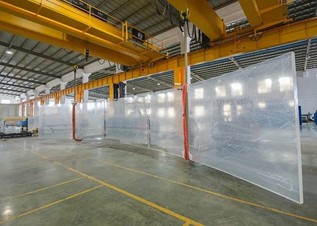
Modern CNC machining workshop. Real-world illustrative image; source and publication note on the final page.
Precision machinery needs precision logistics. The safest shipment starts before the machine leaves the factory—with verified packed dimensions, weight, center of gravity, lifting points and cargo-ready date. |
CNC machining centers, turning centers, laser cutters, press brakes, grinders and related metalworking systems are high-value industrial assets. Their transport risks are not limited to visible impact damage. Moisture, corrosion, vibration, incorrect lifting, weak base construction and poor weight distribution can also affect accuracy, commissioning and project schedules.
ECBEC LIMITED supports overseas forwarders and importers with China-side coordination—from supplier follow-up and factory pickup to export packing review, container planning, supervised loading, documentation and destination handover.
Typical shipments include:
· Vertical, horizontal and five-axis CNC machining centers
· CNC lathes, turning centers and mill-turn machines
· Laser cutting, plasma cutting and waterjet equipment
· Press brakes, shearing machines, stamping presses and punching machines
· Surface, cylindrical and tool grinders
· EDM, wire-cut EDM and precision measuring systems
· Tool changers, chip conveyors, hydraulic units, control cabinets and spare parts
· Complete metalworking production lines sourced from multiple Chinese suppliers
A machine may fit inside a container by external dimensions but still create unacceptable point loads or unsafe axle distribution. Gross weight alone is not enough. The base footprint, packed weight, center of gravity and intended support points must be checked together.
Salt-laden humidity, condensation and repeated vibration can affect guideways, spindles, control components and exposed metal surfaces. Export protection should be designed for the route, transit time, storage conditions and final unpacking environment.
Fork pockets, lifting eyes and manufacturer-approved lifting points must be identified before pickup or loading. If the center of gravity is offset, sling angles and equipment capacity should be reviewed by qualified operators.
Control cabinets, transformers, coolant tanks, tooling, guarding and spare parts may travel in separate packages. A package-level packing list, labels and photo record help keep the delivery complete and reduce disputes at destination.

Heavy machinery secured inside a reinforced export crate. Real-world illustrative image; source and publication note on the final page.
Packing should be finalized only after the logistics team receives accurate machine data and understands how the cargo will be lifted, transported and unpacked. A suitable export packing plan may combine the following measures:
· Clean and dry the machine; drain or secure fluids where required by the manufacturer and carrier.
· Apply suitable anti-rust protection to exposed metal and precision surfaces.
· Use moisture-barrier or vacuum packaging with desiccants when the route and machine sensitivity justify it.
· Bolt the machine to an engineered skid or base that supports the designed load points.
· Immobilize moving assemblies, doors, tool magazines, arms and loose internal components.
· Protect protruding panels, cable interfaces, glass, sensors and control screens.
· Use compliant treated wood packaging and clear handling marks for international movement.
· Mark gross/net weight, dimensions, package number, center of gravity, lifting points and “Do Not Stack” where applicable.
A wooden case is not automatically seaworthy packing. The base design, internal blocking, moisture protection and lifting method matter more than the outside appearance. |
Option | Best suited for | Planning focus |
FCL dry container | Machines that fit the door, internal space and payload limits | Base support, weight distribution, blocking, bracing and safe loading clearance |
Open top | Over-height units or cargo requiring top loading | Over-height approval, lifting plan, tarpaulin protection, securing and extra charges |
Flat rack | Over-width, over-height or unusually heavy machinery | OOG survey data, carrier approval, lifting and lashing design, weather exposure |
LCL | Small machines, spare parts or consolidated supplier cargo | Strong export case, forkliftability, handling exposure, labels and warehouse consolidation |
Air freight | Urgent controls, tooling, replacement parts or compact high-value units | Chargeable weight, airline acceptance, packing strength and security documentation |
Final equipment acceptance, payload, over-dimension limits and securing requirements remain subject to the selected carrier, terminal and actual routing.
Loading day should follow an approved method rather than on-site improvisation. ECBEC can coordinate the factory, trucker, warehouse, packing team and carrier requirements so that all parties work from the same cargo data.
· Inspect the container floor, walls, roof and doors before loading.
· Confirm whether loading will use forklift, crane, gantry, rollers, skates or a combination.
· Position the machine according to the weight-distribution plan and maintain safe door clearance.
· Use engineered timber blocking, bracing, chocks and rated lashing materials suitable for the cargo.
· Avoid attaching lashings to weak covers, pipes or non-structural machine components.
· Record the loading sequence, securing points, seal number and completed condition with photos.

Custom wooden packing work for industrial equipment. Real-world illustrative image; source and publication note on the final page.
For a workable shipping plan—not only a rough ocean freight indication—please provide:
· Pickup address and Incoterm (EXW, FCA or FOB)
· Commodity description, model and HS code if available
· Number of packages and packing type
· Packed length × width × height and gross weight per package
· Machine footprint, center of gravity and lifting-point drawing for heavy or OOG units
· Cargo-ready date and required ETD or arrival window
· Photos, layout drawings and packing drawings
· Destination port and final delivery address, if door delivery is required
· Battery, oil, gas cylinder, magnetized material or other special component details
The commercial invoice, packing list, bill of lading instructions and supporting technical information should use consistent descriptions, quantities, package numbers and weights. The Indonesian consignee and customs broker should confirm import eligibility, classification and any product-specific permits before shipment. Requirements vary by machine configuration and may change; final compliance decisions should be checked against the actual product and current destination rules.
For wood packaging material, confirm that applicable treatment and marking requirements are met. The International Plant Protection Convention publishes the ISPM 15 standard for regulating wood packaging material in international trade. See: IPPC ISPM 15 resources
· Supplier and cargo-ready follow-up across China
· Factory pickup, consolidation and warehouse receiving
· Packing-plan review and coordination with qualified service providers
· FCL, LCL, air freight, open-top, flat-rack and project cargo planning
· Loading supervision, blocking/lashing coordination and photo evidence
· Export documentation and carrier cut-off coordination
· Milestone tracking and destination-agent handover
Planning a CNC machine or metalworking equipment shipment from China? Send us the packed dimensions, weight, pickup address, cargo-ready date and destination. ECBEC will help you evaluate the most practical route, container and loading plan. |
ECBEC LIMITED
We Handle the Logistics, You Take Care of the Relationship.

 Mar 16, 2026
 Oct 19, 2026
 Oct 16, 2026