Oct 14, 2026
 24
Shipping Lifeboats from China
Planning dimensions supports lifting and carrier acceptance
A lifeboat can be ready at the factory while its shipping arrangement is still unresolved. The hull may be too wide for a standard container, a transport cradle may increase the total height, and the receiving shipyard may need a crane to unload it. Fuel, batteries and survival equipment inside the boat add another layer of review.
For shipyards, marine equipment buyers and overseas freight forwarders, the practical question is how to move the complete unit from the Chinese factory to the receiving site. At ECBEC, we start with the boat’s transport configuration and coordinate the equipment, handling and carrier review around that information.

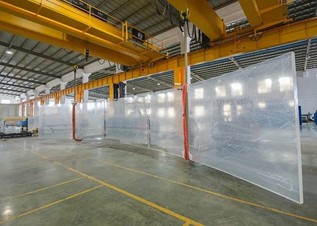
Enclosed lifeboat in a production workshop. Photo: VIKING Life-Saving Equipment.
Send the overall length, width and height in the condition in which the boat will travel. Include its cradle or skid, protective cover and any protruding fittings. Record the gross weight of the complete shipping unit and provide side, end and underside photographs. Carrier OOG measurements also need to account for the securing arrangement. [1]
A manufacturer’s drawing of the bare boat may not show the final transport envelope. If fittings can be removed, ask the manufacturer to confirm what may be detached, how it should be packed and who will reinstall it. Reconfirm dimensions after preparation before finalizing the booking.
A flat rack is a possible solution for a wide or tall lifeboat, but the boat name alone does not decide the equipment. Compare the prepared dimensions, gross weight, support footprint and handling method with the actual equipment and sailing being offered. Carrier approval and terminal capability must be checked for the proposed arrangement. [2]

Equipment selection is shipment specific and subject to acceptance.

Enclosed lifeboats on supporting structures at a factory. Photo: Fountom Marine.
A curved hull needs support at positions approved by the manufacturer. Ask for a transport cradle drawing showing the contact areas, padding, base footprint and attachment points. A stand used in the workshop is not automatically suitable for road and sea transport.
The handling team needs to review both connections: boat to cradle and cradle to the transport unit. On a flat rack, support location and load distribution affect the usable carrying capacity; the marked payload alone is not enough to approve a concentrated load. [1]
Request the manufacturer’s transport lifting instructions, the complete lifting weight and center of gravity, and the number and location of lifting points. Carrier special cargo teams also request lifting and lashing point details when reviewing a shipment. [3]
Do not assume that a launching hook or another boat fitting is suitable for every transport lift. Have the manufacturer and competent lifting team confirm the proposed use. Crane selection, rigging, working space and the need for a spreader must be assessed for the actual lift at the factory and receiving site.

Lifeboat suspended in a factory. Reference photo: Gathering Marine.
Ask the packing team to prepare a securing plan based on the approved support and restraint points. Protect the hull, windows, rails and projecting fittings from contact and abrasion. Keep loose accessories secured and identify separately packed items so they can be reconciled at delivery.
Photographs should show the prepared boat, support arrangement and completed securing. They help the parties review the shipment, but do not replace any survey or certificate required by the carrier. Confirm those requirements early enough to complete them before the terminal deadline.
Provide a complete inventory of installed and supplied equipment. Identify fuel and residual fuel, battery types, gas cylinders, fire extinguishers, flares and other signal devices where present. State whether each item remains installed or is packed separately, and supply supporting data requested for review.
The shipper’s qualified personnel must establish the applicable transport classification and preparation under the current rules. ECBEC can coordinate the information with the carrier. Product approval for use aboard a ship does not replace cargo acceptance for the boat’s sea journey. The IMDG Code edition mandatory in 2026 incorporates Amendment 42-24. [4]
Confirm the final delivery address, access restrictions and unloading equipment before choosing the service. A port-to-port booking still leaves the buyer to arrange terminal collection and onward handling. Delivery to a shipyard may involve an access appointment, a suitable trailer and a crane with sufficient reach at the unloading position.
Agree who provides the unloading crew and who takes charge of the cradle and separately packed accessories. Check whether the boat is going into storage or directly to an installation area. These details affect the delivery plan and help avoid a loaded truck arriving at a site that cannot receive it.

Wrapped lifeboat being secured on a flat rack. Reference photo: MATCHAU via Made-in-China.
ECBEC can review the cargo information, compare suitable shipping options and coordinate factory collection, handling, securing and carrier submissions with the relevant parties. For oversized cargo, we recheck equipment, space and the approved transport envelope before booking. Any dangerous goods acceptance is reviewed against the actual contents and preparation.
Send us the factory address, destination port or shipyard address, quantity, prepared dimensions, gross weight, photographs and drawings. Include the cradle details, lifting instructions, equipment inventory and cargo ready date. We can then develop a proposal covering the agreed scope and identify what needs confirmation before dispatch.
We Know China, We Know SEA.
[1] Hapag-Lloyd Flat Rack Loading and Lashing Guide
https://www.hapag-lloyd.com/content/dam/website/downloads/pdf/Hapag-LLoyd_Flatracks_Lashing_Guide_Nov_2015.pdf
[2] Hapag-Lloyd Special Cargo How to Ship Extraordinary Cargo
https://www.hapag-lloyd.com/en/online-business/digital-insights-dock/insights/2024/09/special-cargo-how-to-ship-extraordinary-cargo-.html
[3] Hapag-Lloyd Special Cargo
https://www.hapag-lloyd.com/en/services-information/cargo-fleet/special.html
[4] IMO IMDG Code
https://www.imo.org/en/publications/pages/imdg%20code.aspx
Photos: VIKING Life-Saving Equipment (viking-life.com); Fountom Marine (fountom.com); Gathering Marine (chinaxhmarine.com); MATCHAU Marine via Made-in-China (matchau.en.made-in-china.com). Third-party reference photographs, not ECBEC shipment records. Obtain permission or replace with authorized photographs before public use.

 Mar 16, 2026
 Oct 19, 2026
 Oct 16, 2026