Aug 24, 2026
 61
61Aquaculture Equipment
from China to Indonesia
Practical shipping solutions for fish farms, shrimp farms, hatcheries and recirculating aquaculture systems

Assembled paddle-wheel aerator photographed inside a supplier's facility before delivery.
We Know China, We Know SEA.
Prepared by ECBEC Limited
Ocean freight | Air freight | Consolidation | China-side export support
Indonesia's aquaculture industry depends on a wide range of equipment to maintain water quality, oxygen levels, feeding efficiency and stable production. Many of these systems are sourced from China, but moving them safely is not simply a matter of booking a container. The shipment may combine corrosion-sensitive machinery, fragile instruments, electrical components, long pipes and bulky tanks from several suppliers.
A successful shipment starts with a clear equipment list, accurate packing information and a logistics plan built around the most sensitive component. ECBEC helps Indonesia freight forwarders, importers and project teams coordinate these details from the supplier's factory to the port of loading in China.
.png "图片2 (2).png")
Real factory and warehouse examples: automatic fish feeding machines (left) and a roots blower production line (right).
Aquaculture projects often involve several equipment categories within one order or one container:
· Paddle wheel aerators, blowers, diffusers and oxygen-generation equipment
· Water pumps, circulation pumps, valves, pipe fittings and filtration systems
· Automatic feeders, feed storage units and control panels
· Water-quality monitors, sensors, testing instruments and alarm systems
· Drum filters, protein skimmers, biofilters and complete RAS modules
· Fish cages, nets, floating pontoons and mooring accessories
· FRP tanks, plastic tanks, hatchery trays and grading equipment
· UV sterilizers, ozone systems, chillers, heaters and temperature-control units
The equipment may be purchased from one manufacturer or sourced from multiple factories in different Chinese provinces. That sourcing pattern directly affects pickup planning, warehouse handling, packing checks and the final loading sequence.
Pumps, motors, bearings, metal frames and electrical cabinets can be vulnerable to humidity and salt-laden air. For sea freight, exposed metal surfaces should be protected, openings sealed and moisture-control materials added where appropriate. Wooden cases and pallets should be suitable for export use and compliant with applicable treatment requirements.
One project may combine heavy blowers, fragile sensors, plastic pipework and lightweight nets. These items should not be packed or stacked in the same way. Heavy machinery needs a stable base and secure lashing, while instruments and control panels require cushioning, dry protection and clear handling marks.
Long pipes, cage frames, large tanks and assembled filtration modules may not fit a standard container efficiently. Their packed dimensions and lifting points must be checked before equipment selection. Depending on the final measurements, the practical solution may be a 40'HQ, open-top, flat rack or breakbulk arrangement.
Automatic feeders, monitoring devices and backup-control systems may contain batteries. Some pumps or machinery may also be shipped with lubricants, while water-treatment packages can include chemicals. These details must be declared before booking. When applicable, the carrier may request documents such as an MSDS, UN38.3 report or transport safety documentation.
Aquaculture projects often grow item by item. If every supplier provides a different packing format, the buyer may not have a reliable total volume until late in the process. Early collection of packing lists helps prevent container shortages, last-minute repacking and unnecessary warehouse costs.
Key planning principle: Build the shipping plan around the largest, heaviest or most sensitive item - not only around the total cubic volume. |
· Protect against humidity. Use sealed wrapping, desiccants, vapor barriers or anti-rust protection according to the equipment type and expected transit conditions.
· Crate sensitive components. Sensors, controllers, screens, UV units and precision instruments should be packed separately with adequate cushioning.
· Secure rotating and movable parts. Impellers, shafts, covers, doors and loose accessories should be immobilized before transport.
· Mark the handling points. Heavy cases should show the center of gravity, lifting positions, gross weight and any no-stack requirement.
· Separate heavy and fragile cargo. The loading plan should prevent machinery from shifting into electrical panels, plastic tanks or cartons during sea transit.
· Photograph before closing. Packing, serial numbers, case condition and container loading should be recorded for easier handover and claim support.
Full-container load is usually more suitable when the equipment is bulky, high-value or difficult to stack. It reduces repeated handling and gives the shipper more control over cargo positioning and lashing. A 40'HQ can be useful for voluminous but relatively light equipment, while heavier machinery requires careful payload and weight-distribution checks.
LCL can be economical for pumps, sensors, feeders, valves and replacement parts that do not fill a container. Because LCL cargo is handled at consolidation warehouses, strong export packing and clear marks are especially important. Fragile, non-stackable or moisture-sensitive items should be declared before the booking is confirmed.
When equipment comes from several factories, ECBEC can arrange domestic pickups, receive the cargo at a China warehouse, check quantities and outer packing, combine the shipment and prepare a practical loading plan. Consolidation gives the buyer one coordinated shipment instead of multiple small bookings with duplicated local charges.

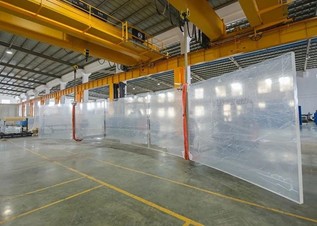
Multiple rotary drum filters assembled and lined up on a factory floor before shipment.
1. Collect the technical and packing information. Obtain the equipment name, HS code if available, quantity, value, packed size, gross weight, supplier address and cargo-ready date.
2. Identify controlled or sensitive items. Confirm batteries, magnets, liquids, chemicals, lubricants, gas cylinders, pressure vessels and unusually fragile components before rate confirmation.
3. Review the packing plan. Check whether the cargo is seaworthy, stackable and suitable for forklift or crane handling. Repacking or reinforcement can be arranged when required.
4. Select the transport solution. Compare FCL, LCL and special-equipment options according to total volume, cargo characteristics, schedule and handling risk.
5. Coordinate pickup and consolidation. Arrange collection from one or multiple factories and track each supplier's cargo-ready status.
6. Load, document and update. Record the cargo condition, supervise loading where needed and provide timely shipment updates to the overseas partner.
The exact requirements depend on the equipment, route, carrier and import arrangement. As a starting point, prepare:
· Commercial invoice and detailed packing list
· Product names, models, materials and intended use
· HS codes for review by the Indonesia importer or customs broker
· Packed dimensions, gross weights and clear cargo photos
· Battery or dangerous-goods documents when applicable
· Wood-packing treatment or marking information when applicable
· Supplier pickup addresses and expected cargo-ready dates
· Consignee details and confirmation of the importer's local eligibility and permits
Indonesia-side customs classification, import licensing and product-specific approvals should be confirmed with the consignee or appointed customs broker before shipment. Early checking is especially important for complete systems that combine mechanical, electrical and treatment components under one project.
ECBEC Limited provides China-side logistics support for Indonesia freight forwarders, importers and project buyers. Our team can coordinate the shipment from supplier collection to export handling, with one point of contact for the overall movement.
· Factory pickup and domestic trucking across China
· Multi-supplier consolidation and CFS warehouse handling
· Packing checks, reinforcement coordination and loading supervision
· FCL, LCL, air freight and special-equipment solutions
· China export support for qualified cargo and compliant trade arrangements
· Fast operational updates for overseas partners and their customers
Send us the product list, supplier locations, packing details, cargo-ready date and destination port. We will review the cargo structure, identify the main shipping risks and recommend a practical route and container plan.
ECBEC LIMITED We Handle the Logistics, You Take Care of the Relationship. |
SEO title: Aquaculture Equipment Shipping from China to Indonesia | ECBEC Logistics
Meta description: Ship aquaculture equipment from China to Indonesia with professional packing checks, consolidation, FCL/LCL planning and China-side export support from ECBEC Logistics.
Suggested URL: /aquaculture-equipment-shipping-china-to-indonesia
Keywords: aquaculture equipment shipping, China to Indonesia logistics, fish farm equipment, shrimp farm equipment, RAS equipment, multi-supplier consolidation
 Mar 16, 2026
 Oct 19, 2026
 Oct 16, 2026