Aug 28, 2026
 81
81INDUSTRIAL LOGISTICS INSIGHT
Elevators, Escalators and Lift Components Logistics
From factory collection in China to coordinated delivery at the project site

Vertical transportation systems are integral to modern commercial and public buildings.
Prepared by ECBEC Limited | China-side logistics support for global projects
Elevators, escalators and lift components may look like conventional industrial cargo, but their transport requirements are closer to project logistics. A single shipment can combine long steel rails, heavy traction machines, sensitive control cabinets, finished cabin panels, glass, doors and pre-assembled escalator trusses. Each item has a different center of gravity, packaging requirement and installation priority.
For importers, contractors and overseas freight partners sourcing from China, the real challenge is not only moving the cargo from port to port. It is keeping multiple suppliers, packing lists, loading plans, documents and delivery milestones aligned so the installation team receives the right materials in the right condition and order.
An elevator or escalator package is rarely a single uniform product. The transport plan must account for the physical characteristics of every module and component, as well as the receiving site's construction schedule.
· Long and heavy pieces: guide rails, beams and escalator trusses may exceed standard container dimensions or create concentrated floor loads.
· Sensitive electrical equipment: controllers, drives, sensors and door systems require moisture barriers, shock protection and secure internal blocking.
· Finished surfaces: stainless-steel doors, cabin panels, glass and decorative parts can be scratched or dented even when the external package appears intact.
· Multi-supplier coordination: machines, rails, doors and electrical parts may come from different factories and reach the port at different times.
· Installation sequence: early-stage structural components may be needed before finishing parts, even if all items were purchased under one contract.
Project cargo principle: the shipping plan should follow the installation sequence, not simply the factory's production sequence. |

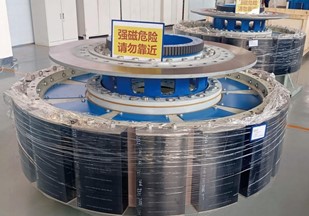
Traction equipment and control systems require careful handling, stable support and protection from moisture.
A complete lift package may include a traction machine, controller, car frame, counterweight frame, guide rails, landing doors, cabin panels, wire ropes, travelling cables, buffers, fixtures and installation accessories. The mix of dense steel and fragile finished parts makes weight distribution and cargo segregation especially important.
Escalator trusses are long, rigid and difficult to re-pack once dispatched. Depending on their assembled dimensions, they may require open-top containers, flat racks, breakbulk handling or specialized road transport. Steps, balustrades, handrails, drive units and electrical components may travel separately in standard containers.
Smaller shipments can include door operators, control boards, inverters, buttons, displays, sensors, safety gears, rollers and maintenance tools. These are suitable for FCL, LCL or air freight depending on urgency, value and packing strength. High-value emergency parts should be clearly identified so the fastest workable service can be selected.

Guide rails and safety components must be protected against impact, distortion and corrosion during transport.
Export packaging should be designed around weight, lifting points, corrosion risk and how the package will be handled at each transfer. A label marked 'fragile' is not a substitute for internal blocking and bracing.
· Traction machines and heavy drive units should be secured to strong skids or cases with verified lifting points and sufficient base strength.
· Control cabinets and electronic assemblies should use moisture-resistant wrapping, desiccants where appropriate, corner protection and shock-resistant fixing.
· Guide rails should be bundled evenly, protected at machined ends and prevented from sliding or bending during lifting and ocean movement.
· Stainless-steel panels and doors should have surface film, edge protection and separation between pieces to prevent metal-to-metal abrasion.
· Wooden packaging used for international transport should meet the destination's applicable wood-packaging requirements and display compliant marks when required.
Before collection, ECBEC can request packing photos, package dimensions, gross weights, center-of-gravity information and lifting instructions from each supplier. These details help identify weak packaging early, before the cargo reaches a terminal where correction is slower and more expensive.
20-foot and 40-foot containers are often suitable for boxed components, machines, doors, rails within internal limits and accessories. Dense cargo must be distributed carefully to avoid overloading individual axle groups or container floor areas.
Oversized trusses, long structural pieces and large assembled modules may require open-top or flat-rack equipment. Accurate dimensions are essential because ocean freight, special-handling charges, securing methods and port acceptance all depend on the final packed size—not only the product drawing.
When a module is too large or heavy for containerized transport, breakbulk or multipurpose vessel service may be considered. The feasibility review should cover lifting studies, terminal capability, weather exposure, lashing, transport cradles and delivery-site access.
LCL can be practical for robust replacement parts and small modernization batches, but the packaging must withstand warehouse transfers and co-loading with other cargo. Air freight is useful for urgent control parts, sensors and critical components when downtime or installation delay costs more than the premium freight.

Large escalator sections require engineered lifting, clear handling instructions and delivery planning.
For projects involving several Chinese manufacturers, origin coordination often determines whether the shipment runs smoothly. Consolidating information early allows the forwarder to compare actual package data with the booking and loading plan.
1. Supplier follow-up: confirm production status, packing completion, pickup addresses and loading restrictions.
2. Cargo data verification: reconcile package count, dimensions, weights, marks and commodity descriptions across suppliers.
3. Pickup and warehouse receiving: arrange suitable trucks, check visible package condition and record receiving photos.
4. Consolidation and segregation: group cargo by system, floor, elevator number or installation stage to reduce confusion at destination.
5. Loading and securing: prepare a practical loading sequence, use suitable dunnage and lashing, and document the completed load.
6. Export coordination: align commercial documents, packing lists, customs data and shipping instructions before cutoff.
For high-value or mixed elevator shipments, loading supervision provides a useful record of how the cargo was received, positioned and secured. Photos should show package marks, visible condition, container number, seal number and the final arrangement before the doors are closed. For oversized cargo, securing should follow an approved method appropriate to the route and equipment.
Cargo insurance is strongly recommended. A forwarder's contractual liability is not the same as all-risk cargo insurance, and damage to precision components can create costs far beyond the value of the affected package when it delays commissioning.

The final delivery plan should match site access, lifting resources and installation milestones.
Port arrival is only one milestone. Before shipment, the destination agent or importer should confirm customs requirements, import eligibility, tax and product-document needs, free-time expectations, delivery permits and the availability of cranes, forklifts or rigging teams.
Site access deserves special attention. Urban projects may face restricted delivery hours, narrow roads, basement clearances, unfinished loading bays or limited laydown space. For escalator trusses and heavy lift machinery, route surveys and lift plans may be necessary. When phased delivery is required, warehouse storage and release scheduling should be planned before the first container departs.
· Pickup address for each supplier and cargo-ready date
· Detailed packing list with package dimensions and gross weight
· Photos or drawings of the final export packaging
· Commodity description and material details for customs review
· Center of gravity, lifting points and handling instructions for heavy units
· Required delivery date and installation sequence
· Port of discharge, final delivery address and site-access constraints
· Preferred transport mode, budget priorities and cargo-insurance needs
ECBEC Limited provides China-side logistics support for overseas freight forwarders, importers and project teams. Our service can cover supplier coordination, factory pickup, warehouse receiving, consolidation, packing checks, export documentation, FCL and LCL shipping, special-equipment arrangements, loading supervision and destination coordination through our agent network.
For China-to-Indonesia and wider Southeast Asia shipments, we help clients compare routing, equipment and schedule options based on the actual cargo—not only a basic port-to-port rate. For oversized, heavy or multi-supplier projects, early review gives more time to improve packing, secure suitable equipment and avoid last-minute changes.
Planning an elevator, escalator or lift-components shipment from China? Send us the packing list, photos and required schedule for a practical logistics proposal. |

 Mar 16, 2026
 Oct 19, 2026
 Oct 16, 2026