Sept 01, 2026
 36
36Coconut Processing Machinery Logistics to Indonesia
How to plan, pack and ship coconut production equipment safely from China
.png "图片1 (1).png")
Illustrative coconut milk processing line in operation. Image source: Made-in-China supplier listing
SEO summary: Reliable machinery shipping starts before the cargo reaches the port. Accurate dimensions, export-grade packing, supplier coordination and an Indonesia-ready document plan are essential for protecting food-processing equipment and controlling total landed cost.

Indonesia is one of the world's major coconut-producing countries, supporting a wide range of downstream industries. Coconut water, coconut milk and cream, virgin coconut oil, desiccated coconut, coconut flour, coir fiber and shell-based products all require different combinations of processing, hygienic handling, drying, extraction, filling and packaging equipment.
For Indonesian manufacturers, project owners and Indonesia freight forwarder partners, sourcing machinery from China can provide access to individual machines, modular production lines and complete turnkey systems. The logistics challenge is that a production line is rarely a single uniform shipment. Stainless-steel tanks, conveyors, motors, control cabinets, pumps, pipes and spare parts may have different dimensions, handling points and protection needs.
That is why the freight plan should be developed alongside the purchase order. A logistics team needs the final packing list, packed dimensions, gross weight, center of gravity, lifting points and readiness dates before choosing the container type or confirming a sailing.


Compact machines may move by LCL or as part of a consolidated production-line shipment. Image source: Made-in-China supplier listing
l A single line may come from several suppliers. One factory may provide the extractor, another the filling unit and a third the boiler or packaging machine. Without a consolidation plan, mismatched readiness dates and separate documents can create unnecessary shipments and additional handling.
l Quoted machine dimensions are not always packed dimensions. Skids, protective frames, wooden cases and removable accessories can significantly change the cubic volume and container choice.
l Food-processing equipment contains sensitive surfaces and controls. Stainless-steel panels can be scratched, electrical cabinets can suffer vibration damage, and unprotected metal components can corrode during humid sea transit.
l Large tanks and integrated skids may become out-of-gauge cargo. The transport route from the Chinese factory to the loading port must be checked before an open-top or flat-rack plan is approved.
Good machinery packing should be designed for the actual handling chain: factory lifting, trucking, warehouse handling, container stuffing, sea movement, port discharge and final delivery. The packing plan should match the value, fragility and weight distribution of each module.
l Disassemble and label carefully. Remove vulnerable pipes, hoppers, sensors and protruding parts when practical. Use matching marks and a reassembly list so the installation team can identify every component.
l Protect against humidity and corrosion. Use moisture barriers, desiccants, VCI materials or vacuum sealing where appropriate. Seal electrical cabinets and protect stainless-steel contact surfaces from abrasion.
l Build a load-bearing base. Heavy equipment should be bolted to a strong skid or crate base with the lifting and forklift points clearly marked. The base must distribute weight without damaging the machine frame.
l Use compliant wood packaging. Solid-wood crates, pallets and dunnage used in international trade should be treated and correctly marked under ISPM 15 requirements. The marking should remain visible after packing.
l Separate loose accessories. Spare parts, tools, manuals, cables and small fittings should be boxed, inventoried and cross-referenced to the main machine number.
.png "图片3 (1).png")
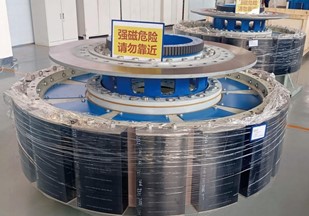
Export packing should protect both the equipment and its lifting geometry throughout the handling chain. Image source: Hosea Project Movers

Practical rule: Do not select the container only from the equipment catalogue. Use final packed dimensions and gross weights, then check door opening, internal height, payload, floor loading and lifting method against the carrier's actual equipment specifications.

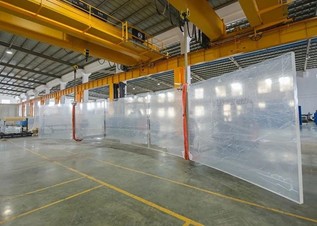
Integrated lines often need a module-by-module packing and container allocation plan. Image source: Made-in-China supplier listing
l Collect technical data: Obtain the equipment list, final packed dimensions, gross weight, values, photos, lifting points, center of gravity and cargo-ready dates.
l Map suppliers and pickup points: Confirm which Chinese factories are involved and whether the cargo should move directly to port or through a consolidation warehouse.
l Review packing: Check crate structure, moisture protection, markings, serial-number references and ISPM 15 treatment for solid-wood packaging.
l Choose the shipment plan: Compare LCL, 20'GP, 40'HQ, open-top, flat-rack or breakbulk options based on total cost, handling risk and schedule.
l Coordinate booking and loading: Reserve space, arrange trucks, verify loading equipment and prepare a stuffing and lashing plan for heavy or OOG units.
l Control export documents: Align the commercial invoice, packing list, machine descriptions, HS codes and bill-of-lading instructions before customs declaration.
l Track the voyage and arrival: Monitor vessel updates and coordinate document release, destination clearance readiness and final delivery with the Indonesia-side party.
The exact document set depends on the machinery, HS classification, commercial terms and the importer's status. A typical shipment may require a commercial invoice, packing list, sales contract or purchase order, bill of lading, export declaration information, model and serial-number list, machinery catalogue, technical specifications and certificate of origin when applicable.
The Indonesian consignee should verify its NIB/API status and any commodity-specific restrictions or approvals before booking. New and used machinery may be treated differently, and particular electrical, pressure, food-contact or industrial equipment may require additional review. HS code classification should be checked against the real function and configuration of the machine, not only the supplier's general description.
Compliance note: Import requirements and taxes can change. Confirm the current rules with the Indonesian importer, customs broker or competent authority before shipment. ECBEC can coordinate the China-side documents and work with the appointed destination partner, but final import approval remains subject to Indonesian regulations and customs decisions.
l Pickup address and number of Chinese suppliers
l Destination port and final delivery address in Indonesia
l Machine name, function, model and HS code if available
l Quantity of packages and final packed dimensions for every case or skid
l Gross and net weight, including any single-piece weight above normal handling limits
l Cargo-ready date and preferred delivery timeline
l Loading method, lifting points and center-of-gravity details for heavy units
l Cargo value, Incoterm and insurance requirement
l New or used condition, voltage and any pressure vessels, oils, batteries or other controlled components
l Photos, layout drawings and packing drawings for oversized modules
ECBEC Limited supports machinery shipments from Chinese factories to Indonesia through one coordinated China-side operation. Our team can follow multiple suppliers, arrange domestic pickup, receive cargo at a warehouse, verify marks and package counts, coordinate export packing, consolidate compatible machines and prepare the shipment for sea transport.
Depending on the project, we can arrange LCL, FCL, open-top, flat-rack and other project-cargo solutions, together with trucking, warehousing, customs coordination, loading supervision and destination delivery support through qualified partners. We focus on the details that protect the machinery and keep the project moving: accurate cargo data, realistic sailing options, clear document instructions and early identification of loading or import risks.
ECBEC advantage: We handle the logistics in China, so you can focus on the production line, your customer and the project schedule. We Know China, We Know SEA.
Planning a coconut machinery shipment to Indonesia?
Send us the packing list, pickup address and destination. We will review the equipment profile and recommend a practical shipping plan.
ECBEC Limited | www.ECBECS.com
 Mar 16, 2026
 Oct 19, 2026
 Oct 16, 2026